Growing Pains
The highs and lows of watching your child grow up.
Jodie
4/23/20265 min read
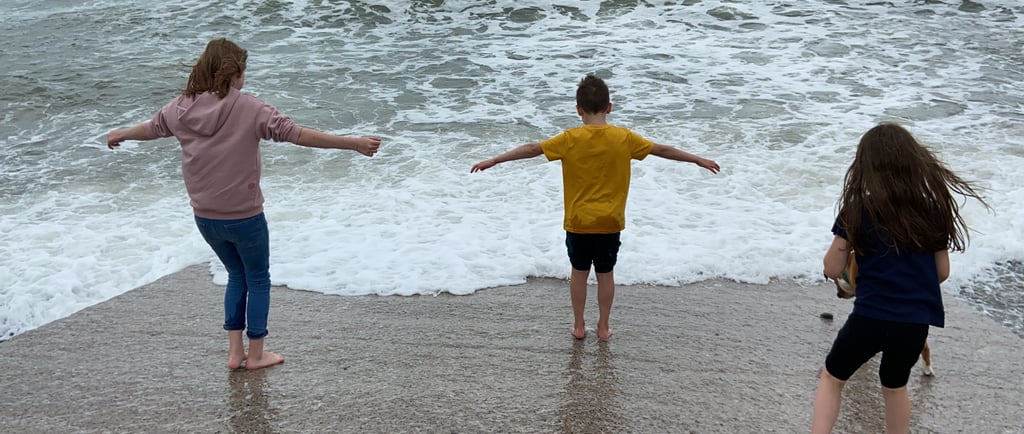
When you're in the thick of it all you feel like you don't have time to come up for air, but then one day you realise that the tiny newborn you could hold in one arm is now a pudgy toddler who can no longer fit in to their (your) favourite babygro. You can't remember the last time you carried them up the stairs to bed, or when they last fell asleep in your arms. You no longer need to cut up their dinner for them and they go in the bath or shower alone, embarrassed to be seen and needing privacy. There are certain times during childhood when this seems to speed up even more. I am personally finding the teenage years to be the most difficult to navigate so far. Our older three are currently twelve, fourteen and sixteen years old. I look back fondly at the days when I was rushing around with three under fours, despite obviously knowing that during that time I was constantly exhausted. Even with our youngest being only five years old I can see her growing in front of my eyes; maybe because her older siblings have shown how fast time goes. The baby years are well behind us and their needs and wants are ever changing - and it is really bloody hard to keep up.
That push and pull between them being a child and an adult is testing to say the least, with hormones flying everywhere and the usual ways to deal with things becoming less and less effective. With a toddler tantrum you can generally have a cuddle, change the subject or coax them round to a better mood within minutes; teens are not so malleable. You realise that the way you have shown up for them historically is not the way to do things now - there brains are being rewired and that can be really hard on them and us.
From around twelve years old a child will no longer look at their parents as being the centre of their universe, finding influence more so in their peers and strangers on social media. This is scientifically backed, statistically accurate and normal human behaviour, but it comes as a shock when you are used to snuggling together on the settee, sitting on their bedroom floors for hours reading, holding their hand and navigating through bad dreams and I suppose, just being the one that's in charge. It is a hard pill to swallow that they suddenly seem to be behind a closed door instead of hanging off your arm and their eyes roll back in their head every time you open your mouth to speak.
Since becoming a mom, I have predominantly been at home with my kids, giving up work or working around them. I want them to know I am always there for them and always ready to help with a problem or talk about whatever is on their minds. They have always been my main priority and we want the best for them in all decisions we make. As a family we have always tried to get in as much family time as possible - holidays, days out, family film nights and chats about everything. One of the big positives about home education is the fact that we get so much time together...it can also mean that we all test each others' need for space.
It felt like an overnight shift with each of our three older ones that they just didn't want, or need me around as much. More time in their rooms. Resistance to suggestions of activities or changes in how they now want to spend their time. Suddenly, I have felt like I am competing with the outside world for my kid's attention, or respect, or even just to have a conversation without feeling like I'm going to offend them. I feel terrible that I sometimes feel like I don't know them any more, or that this new version of them just cannot be entertained or pacified in the same way and that I need to change things up to keep up.
Now, obviously you treat a toddler and a teen differently; I am not suggesting that every age of child should be expected to behave the same or want the same things. BUT. Sometimes I think it is safe to say that teens are quite similar to toddlers: they get grumpy when they're tired or hungry, and they have BIG emotions that they don't know how to control. As much as I have been there for every version of each one of my kids, the shift in everyone's needs and expectations can be difficult. Anger, frustration, annoyance or good old sibling rivalry show up regularly in our house and nobody likes being told that they are in the wrong, or that they can't have everything that they want or do anything they like. We try to be firm but fair with boundaries and make our expectations as clear as possible, which can feel like a full time job when you've got three of them at you!!
I also see lots of positives from right now - they are growing in responsibility and can manage tasks and situations that their younger selves wouldn't have coped with. It's lovely seeing them play and care for their little sister. We can watch more grown up films and shows together, playing games and going places that we as adults also enjoy, sharing common interests. Watching old favourite shows from the nineties with my teen girls is a sweet mix of nostalgia and new memories to bank. Having my fourteen year old son bring me a cup of tea out of the blue is pretty cool as well. They are more independent, and are all becoming genuinely kind, funny and intelligent human beings.
There's a bit in the show, Modern Family, where Jay talks about watching the different versions of your kids come and go, and how you barely get time to miss one version before you realise that they've moved on and changed again. I've never resonated with a TV speech more in my life - it is beautiful watching your kids grow up and you are lucky to get front row seats, but with it comes a sadness you can't quite move away from.
They are still children, becoming different, older versions of themselves. I remind myself that it's my first time doing this too - our first child is sixteen and we have been through every milestone and bump in the road together. We will all make mistakes, all react badly sometimes, all come out the other end. Hopefully I can tame my own emotions to aid them in understanding theirs, and better regulate my reactions when they are disregulated, but I hope they can also respect the fact that I'm only human too and I'm not perfect. I'm trying my best. I just have to constantly decide when to hold on, and when to let go. Try not to take things personally. Keep showing up. Love them as they are.
Maybe there are other parents out there who also go through this regular internal tennis match. What's the hardest stage of parenting that you've been through? Share your tips or tricks for the tough stages - basically for all and any stages of parenting!